

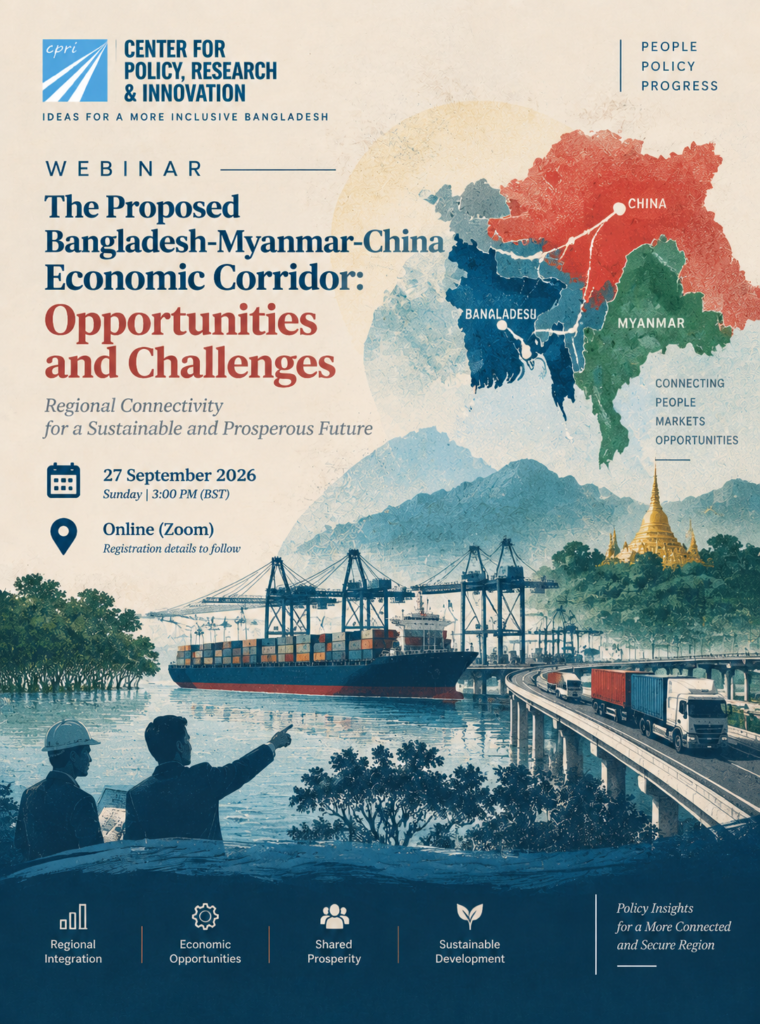
Coastal industrial zones, special economic export corridors, and municipal transportation networks across South Asia face severe operational risks from sea-level rise, erratic monsoonal inundation, and extreme thermal stress. The Center for Policy, Research & Innovation (CPRI) is organizing this two-day symposium to bridge the gap between climate resilience science and infrastructure project financing.
Developing economies can no longer treat climate adaptation as an isolated environmental mandate; it is a fundamental determinant of sovereign credit ratings, physical asset longevity, and industrial competitiveness. This academic and technical symposium convenes civil structural engineers, catastrophe-risk modelers, green-bond underwriters, and macroeconomic planners to develop resilient project appraisal standards.
Working Sessions & Empirical Labs:
- Stress-Testing Critical Infrastructure Assets: Incorporating high-resolution hydrological modeling into preliminary engineering and economic feasibility studies (Feasibility 2.0).
- Green Bonds & Blended Climate Financing: Unlocking institutional capital through debt-for-climate swaps, credit-enhanced green municipal bonds, and multilateral co-financing tranches.
- Spatial Planning & Coastal Land Use: Reforming industrial zoning laws to prevent capital concentration in high-risk alluvial and cyclonic surge corridors.
Day two includes an applied computational workshop demonstrating how to integrate GIS spatial-risk data into macroeconomic cost-benefit analyses. All registered attendees receive full documentation packs, open-access risk-assessment datasets, and policy briefing monographs produced by CPRI’s Energy & Climate Transition Unit.